2 min read

A place to turn for care: How Manyiel’s PHCU is saving lives in South Sudan’s underserved regions

In Aweil North, South Sudan, access to essential health services is making a tangible difference for families and communities.

Early in the morning in Manyiel, the waiting area of the Primary Health Care Unit (PHCU) is already busy. Pregnant women are waiting for antenatal consultations, while mothers bring babies for routine childhood vaccinations. For many families, this modest facility represents their first real opportunity to access health care close to home.

Among those waiting is Angelina Ahok Arou, a mother of three children and currently pregnant with her fourth child. She remembers how different life was before the became operational.

Angelina lives with her family in Maper Dut Thou and supports her household through farming. Like many women in the area, she balances caring for young children with managing daily household and agricultural responsibilities, making nearby access to health care especially critical.
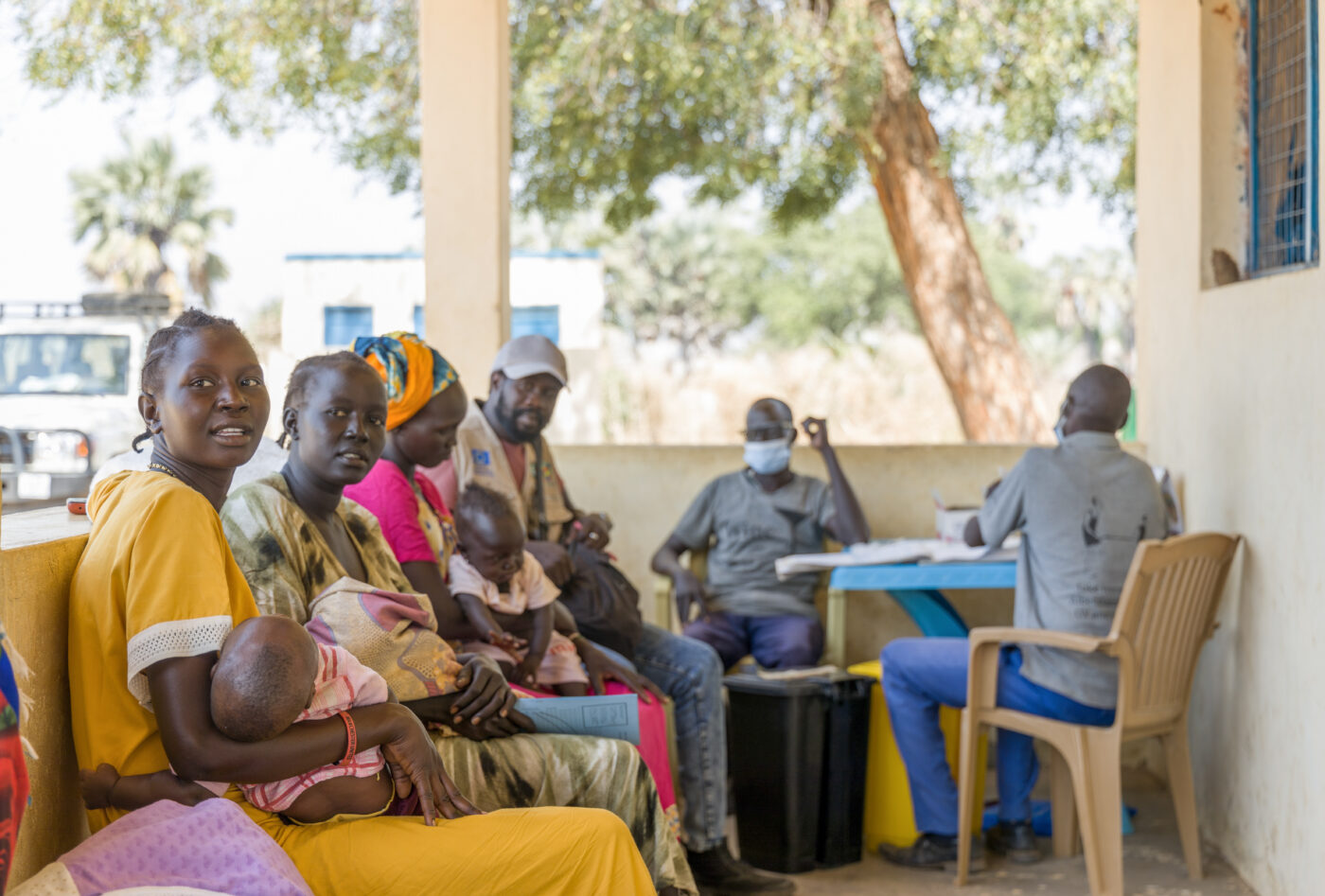
Before this facility opened in our area, life was very difficult. We relied on traditional remedies because the nearest hospital was several hours away, and reaching it in emergencies was almost impossible. Women gave birth at home without medical assistance, and common illnesses like malaria or diarrhoea often became life-threatening

Angelina’s experience reflects the reality faced by many communities in Aweil North County, where access to health services has long been limited.

Health needs in the fragile Aweil North

Aweil North is located in northern South Sudan, close to the border with Sudan. The county is particularly vulnerable to disruption, natural disasters and inter-communal violence. These challenges have been further compounded by the arrival of refugees and returnees from Sudan, placing additional pressure on already limited services and infrastructure.

In 2025, the humanitarian situation in South Sudan remained severe, with an estimated 9.3 million people nationwide requiring humanitarian assistance, a number expected to rise further in 2026. Limited infrastructure, weak service availability and high levels of food insecurity have increased reliance on external support across the country.

According to OCHA’s 2025 Humanitarian Needs Overview, an estimated 141,088 people in Aweil North are in need of humanitarian assistance — approximately 76% of the county’s total population.

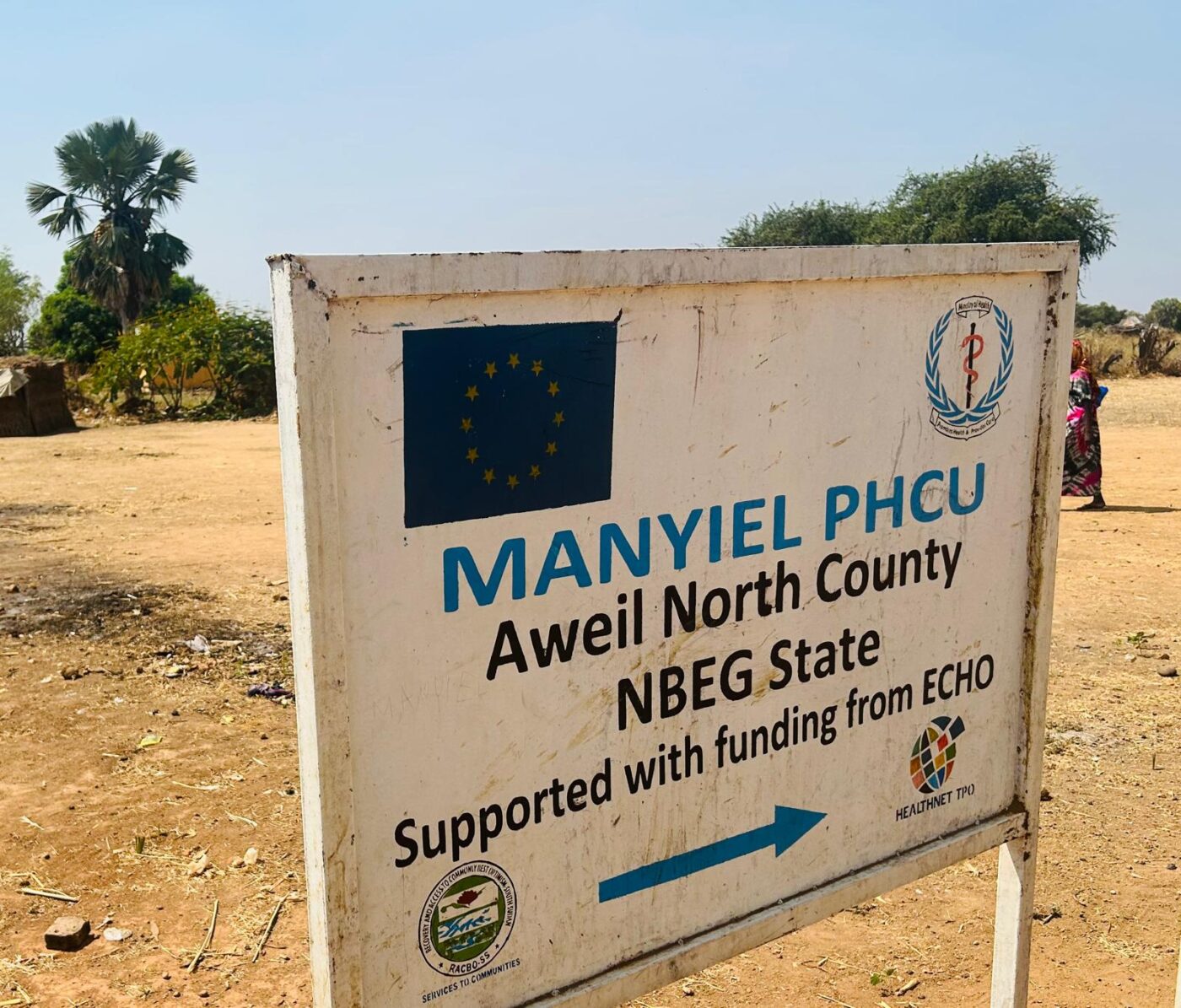
A road sign showing Manyiel PHCU Aweil North, South Sudan
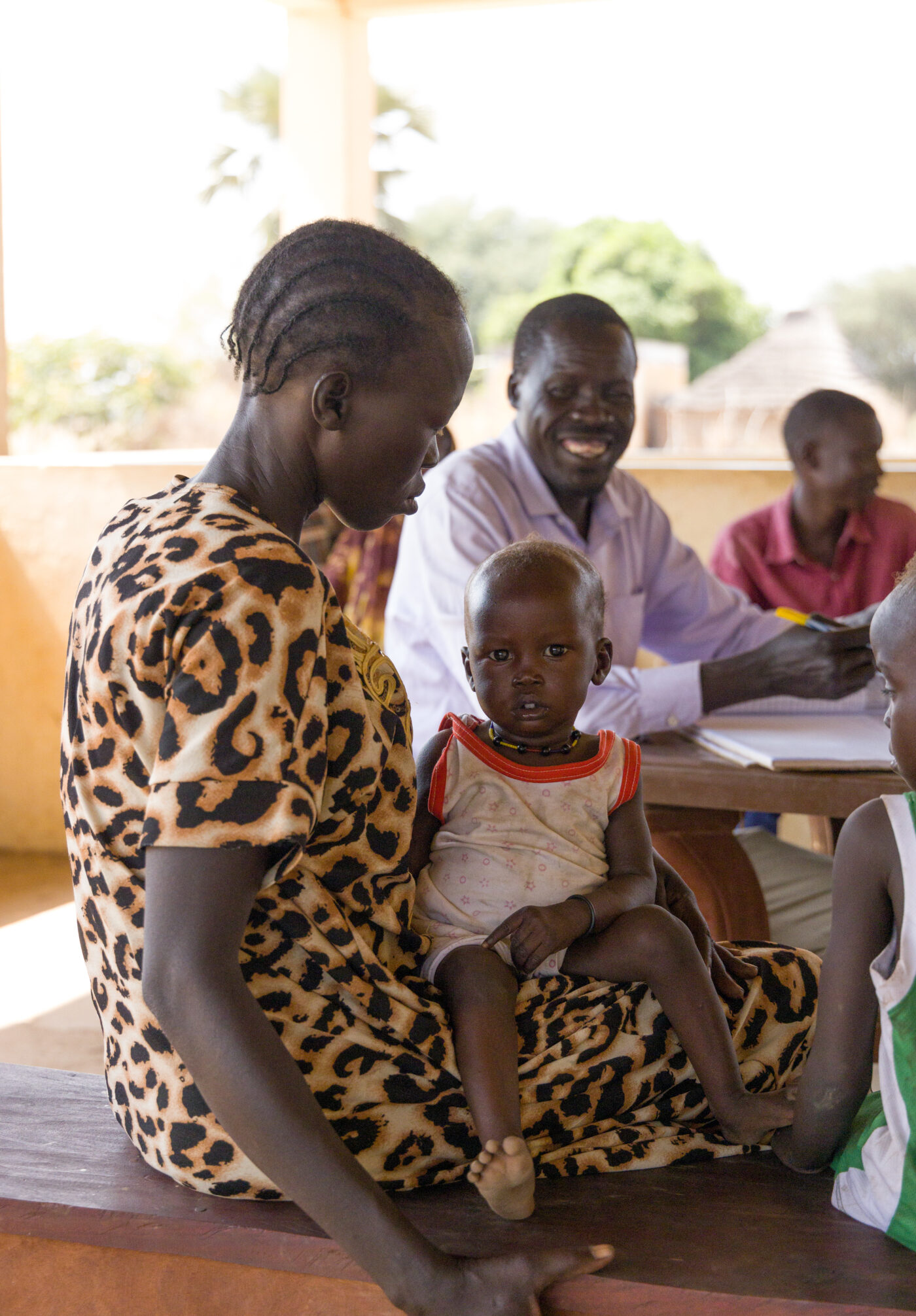
Women and children at a primary health facility in Aweil North, South Sudan
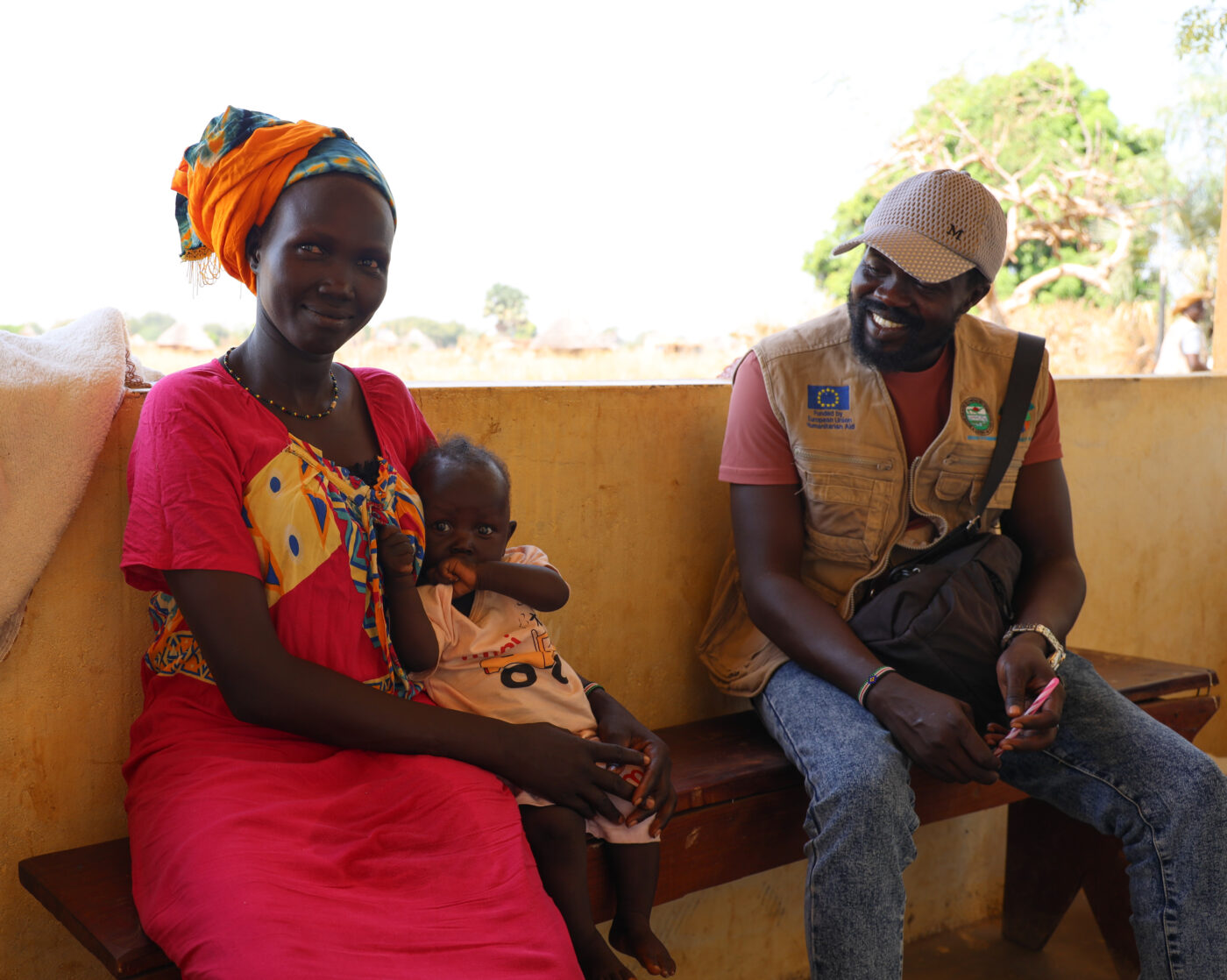
Mother and child smiling to camera next to health worker
Manyiel PHCU as a critical access point for health services

Against this backdrop, the Primary Health Care Unit in Manyiel plays a critical role in ensuring continued access to essential health services. With the support of the European Union HealthNet TPO supports the functioning of the facility as part of an integrated, multi-sectoral response in Aweil North. Although located in Manyiel, the Primary Health Care Unit serves a much wider area, including communities where health facilities are only partially functioning or not operational at all. As a result, the centre has become a critical entry point to care for a growing population, responding to urgent health needs that extend well beyond its immediate surroundings.

Despite operating in a highly challenging environment marked by seasonal flooding, isolation and poor road access, the facility remains consistently operational. On average,  around 1,500 patients receive treatment at the health centre each month, reflecting both the scale of health needs and the importance of reliable services in this underserved region. For many families, the Manyiel PHCU represents their main, and often only, opportunity to access timely and lifesaving health care.

Essential primary health care services at Manyiel PHCU 

Women and children account for approximately 80 to 90% of those accessing care at Manyiel PHCU, highlighting the facility’s central role in maternal and child health. Like many women in her community, Angelina now attends regular antenatal care visits,  services that were previously out of reach.

In addition, the PHCU provides a range of essential primary health care services, including:

  • Outpatient consultations
  • Vaccinations for pregnant women and children
  • Antenatal and postnatal care, including safe deliveries
  • Distribution of delivery kits
  • Outpatient treatment for acute malnutrition

As access to these services has improved, communities have observed tangible changes. Reflecting on this progress, Angelina explains:

📌

Part of a wider primary health care response

Manyiel PHCU is one of seven health facilities supported by the European Civil Protection and Humanitarian Aid Operations (ECHO) to ensure continued access to essential primary health care services in Aweil North.

In 2025, this support contributed to the following selected results: 

  • 24,873 primary health care consultations provided 
  • 28,078 people reached through community health education sessions 
  • 2,397 women accessed antenatal care services
Since this facility opened, death cases have decreased significantly. We no longer hear about women dying during childbirth or children dying from preventable diseases. Services are free or very affordable, which means even the poorest families can access health care. Now, when someone gets sick, we know there is a place we can go for help. This sense of security is priceless. Our outlook on the future has changed; there is hope and confidence that did not exist before.
What works, and what continued support can achieve 

The experience of Manyiel PHCU demonstrates what is possible when sustained support enables health facilities to function effectively in challenging contexts. Through this European Union–supported project, HealthNet TPO is helping ensure that communities in Aweil North can access essential, lifesaving primary health care services that respond to their most urgent needs.

For families like Angelina’s, the PHCU is more than a service point. It is a reliable place to seek care, plan for safer pregnancies and protect children from preventable illness. As humanitarian needs continue to rise across South Sudan, maintaining and strengthening facilities such as Manyiel PHCU remains critical to safeguarding health, stability and resilience at community level.

To learn more about this work, visit the project page: Integrated emergency health, nutrition, protection and response to emergencies for vulnerable host and returnee populations.

Subscribe to our newsletter

Get exclusive access to inspiring stories and updates.