

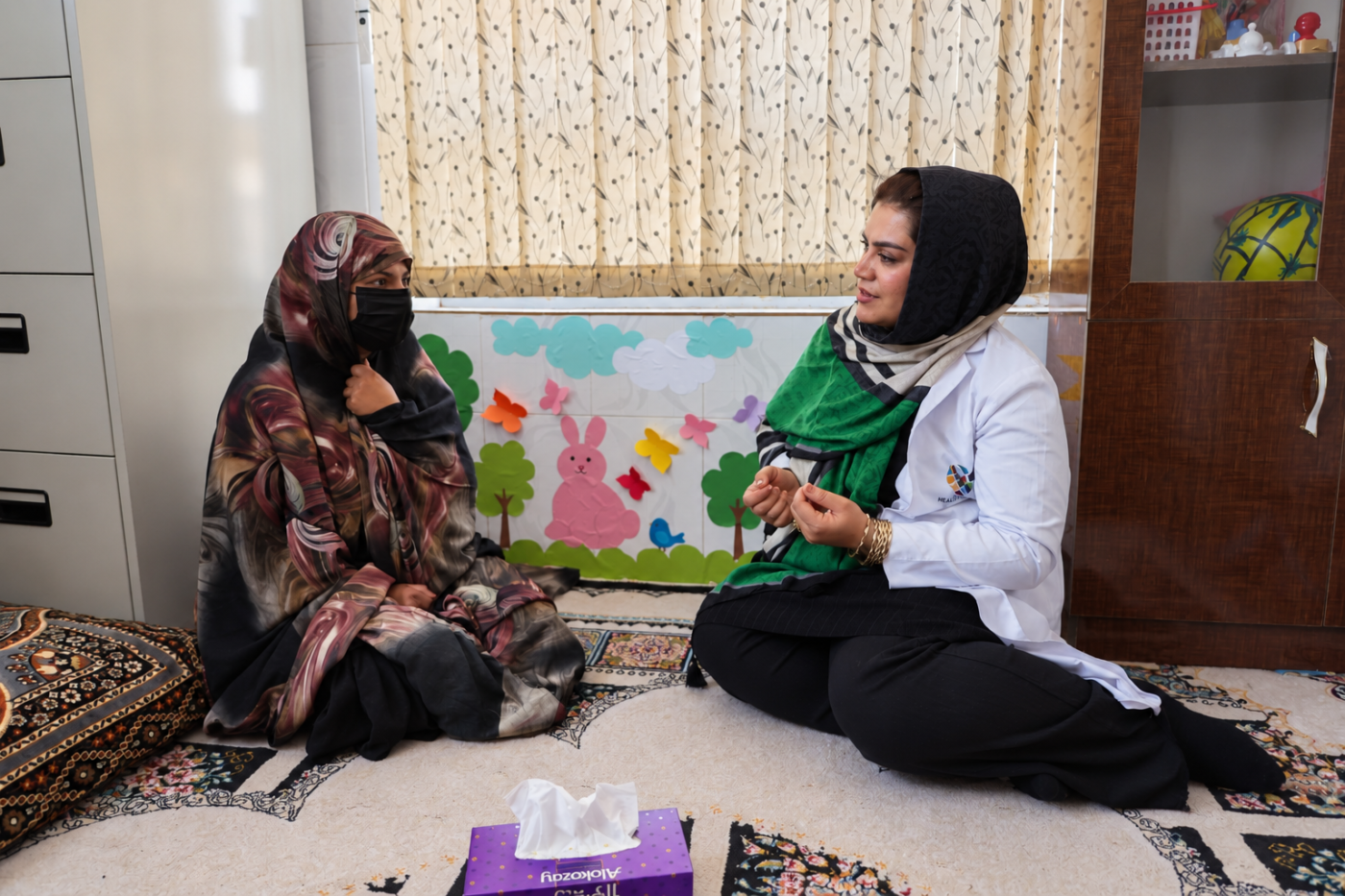
When mental health needs exceed available support
Decades of conflict, displacement, poverty and loss have had a profound impact on mental health and psychosocial wellbeing in Afghanistan. At the same time, access to appropriate support remains limited, particularly for people living in remote communities and for women and children.
Meeting these needs requires more than providing individual services. Mental health and psychosocial support needs to be part of the wider health system, with trained professionals available in health facilities and connections to support within communities and schools.
Strengthening mental health support
With support from the European Union, HealthNet TPO works across Afghanistan to improve the availability and quality of mental health and psychosocial support (MHPSS). Our approach combines strengthening services within the public health system with making support more accessible at community level.
An important part of this work is developing the skills of the people who provide care. HealthNet TPO trains Health Social Counsellors, doctors and other healthcare professionals so they can identify mental health needs, provide appropriate support and refer people for more specialised care when needed. Training for medical professionals is based on the World Health Organization’s Mental Health Gap Action Programme (mhGAP).
Bringing support into communities and schools
Mental health and psychosocial support also extends beyond health facilities. Community health workers can help identify people who may need support, connect them with appropriate services and provide psychosocial support within their communities. HealthNet TPO strengthens their capacity to respond to people experiencing stressful life circumstances through approaches including Problem Management Plus (PM+).
We also work to strengthen support for children and adolescents through schools. By connecting schools with trained mental health professionals and strengthening the skills available to respond to children’s needs, the programme aims to support both their mental wellbeing and their ability to participate in education.
Azita’s Story: From receiving support to supporting others
Growing up in a remote village in Badakhshan Province, Azita had few opportunities to pursue her ambitions. She describes feeling isolated and having little confidence in herself or what her future could hold.
That began to change when Azita joined HealthNet TPO’s training programme to become a psychosocial counsellor. Through the programme, she developed new skills and knowledge that helped her strengthen her own confidence and enabled her to support others in her community.
The psychosocial counselling training enabled me to develop new skills and have financial opportunities. I no longer felt isolated and I saw my self-confidence grow. I now have an ability to take care of myself, my family and help others around me.
Today, Azita uses those skills to support people in her community, particularly women, through psychosocial counselling. Her experience shows how investing in local mental health professionals can have an impact that extends beyond the individual: strengthening local expertise and making support available within the communities where it is needed.