4 min read

One year on: rebuilding hope after the earthquake in Arrit Valley

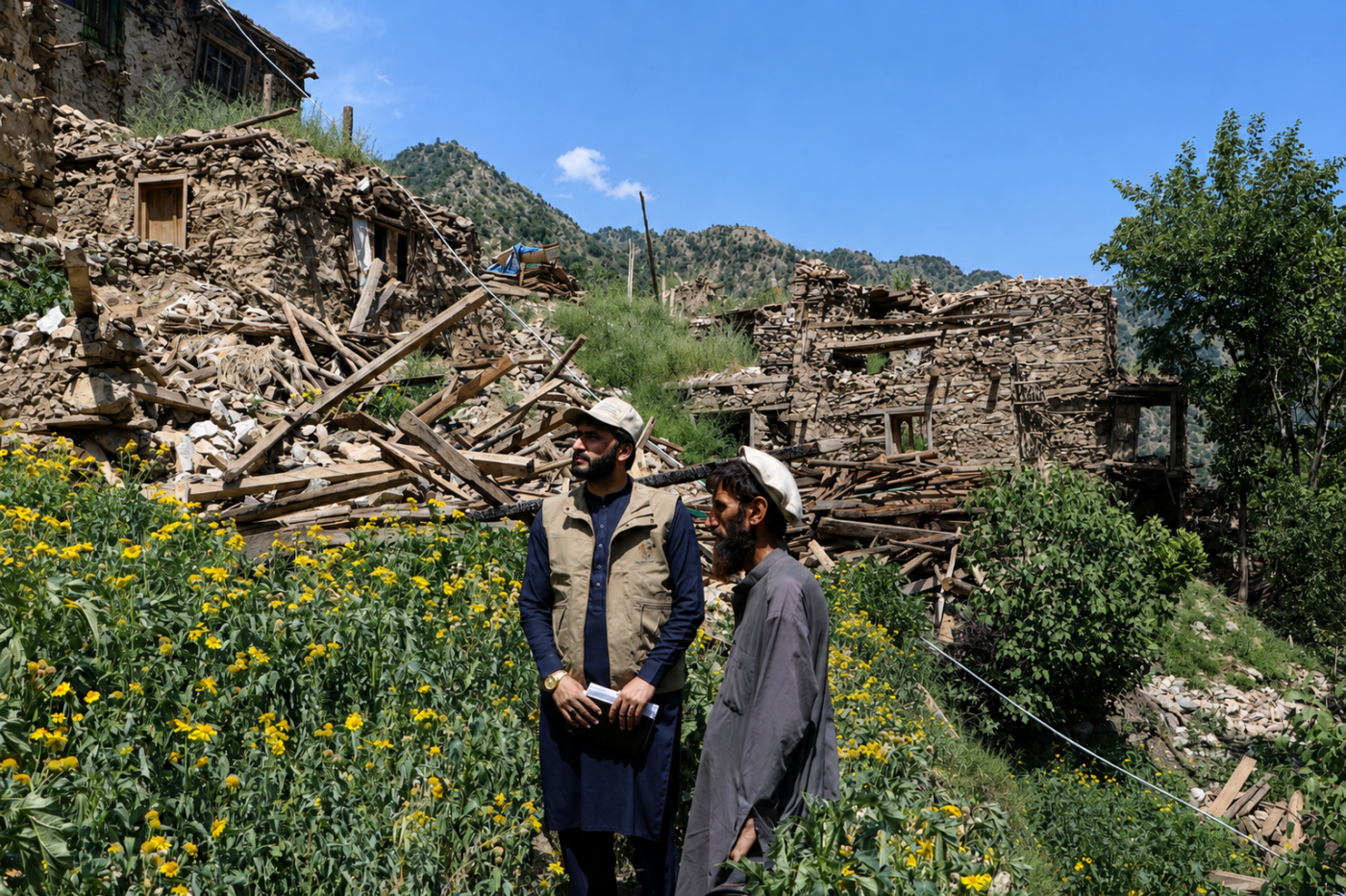
Two men stand among damaged stone houses and rubble in Arrit Valley, Kunar, Afghanistan.

Yellow wildflowers dot the hillsides of Arrit Valley in Kunar Province, Afghanistan, softening a landscape still marked by collapsed homes and broken stone walls. Standing quietly among them, Abdul Samad looks over what remains of his village. One year after the earthquake that struck eastern Afghanistan, the destruction is still visible. So is the grief.

On the night of 31 August 2025, a powerful earthquake struck eastern Afghanistan, devastating communities across Kunar Province and neighbouring areas. In total, 1,992 people lost their lives and 3,631 were injured. Arrit Valley was among the hardest-hit areas, where hundreds of homes collapsed and entire villages became isolated as roads were destroyed, making it extremely difficult for emergency assistance to reach many affected communities.

One year later, Abdul Samad is still recovering from the earthquake.

Before the earthquake, Abdul Samad worked as a daily labourer, earning just enough to support his family. On the night of 31 August 2025, he lost six of his children when the earthquake destroyed his home. Abdul Samad, his wife and one of their sons were also seriously injured. In a single night, he lost not only his children and his home, but also the life he had built over many years.

Isolated after the earthquake

For Abdul Samad, the hours after the earthquake were filled with uncertainty. After receiving emergency care, he, his wife and their 15-year-old son were flown by helicopter to Gambiri Government Hospital in neighbouring Nangarhar Province for further treatment.

Meanwhile, many families remained in Arrit Valley, where destroyed roads and continuing aftershocks left communities cut off from the outside world. While helicopters evacuated the most critically injured in a few locations, many others waited for medical assistance to reach their communities.

To reach those who could not be evacuated, HealthNet TPO teams carried medicines and emergency supplies on foot, walking for hours through damaged mountain paths. Upon arrival, they immediately began providing first aid and emergency medical care to those who had been injured.
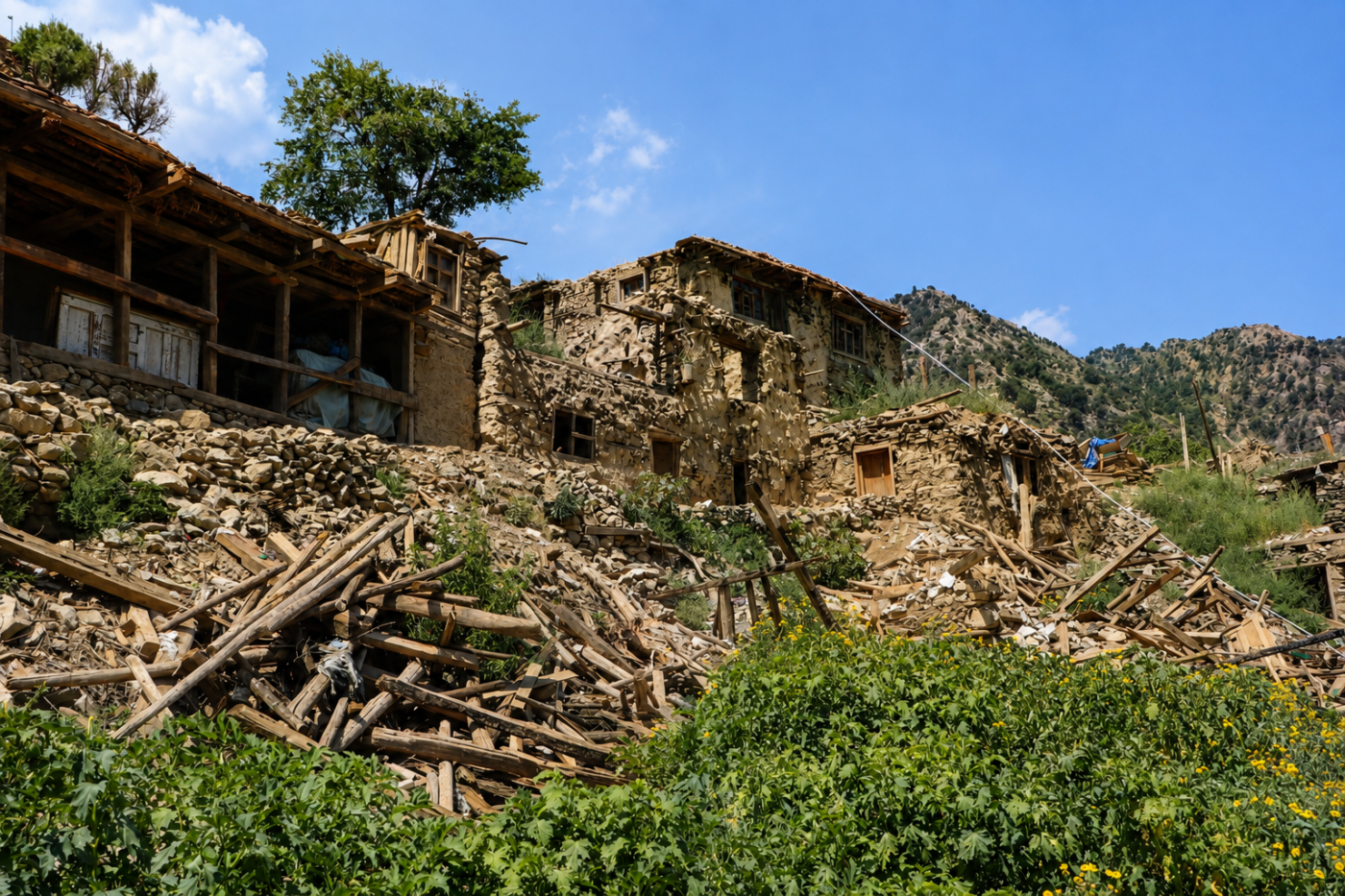
Damaged stone and mud houses surrounded by rubble, broken wooden beams and green vegetation in Arrit Valley, Kunar, Afghanistan.
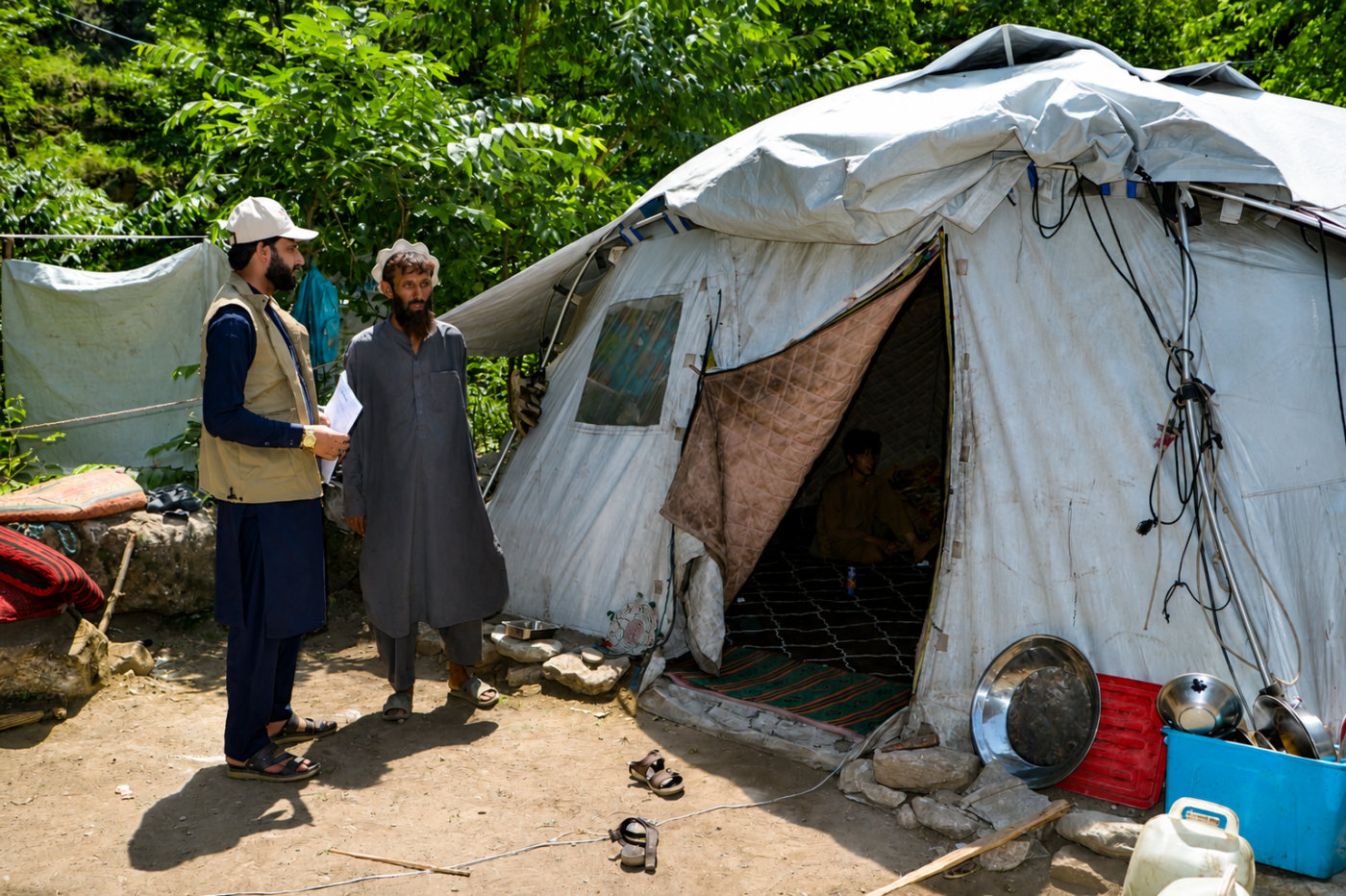
A HealthNet TPO staff member speaks with a community member outside a temporary shelter in Arrit Valley, Kunar, Afghanistan.
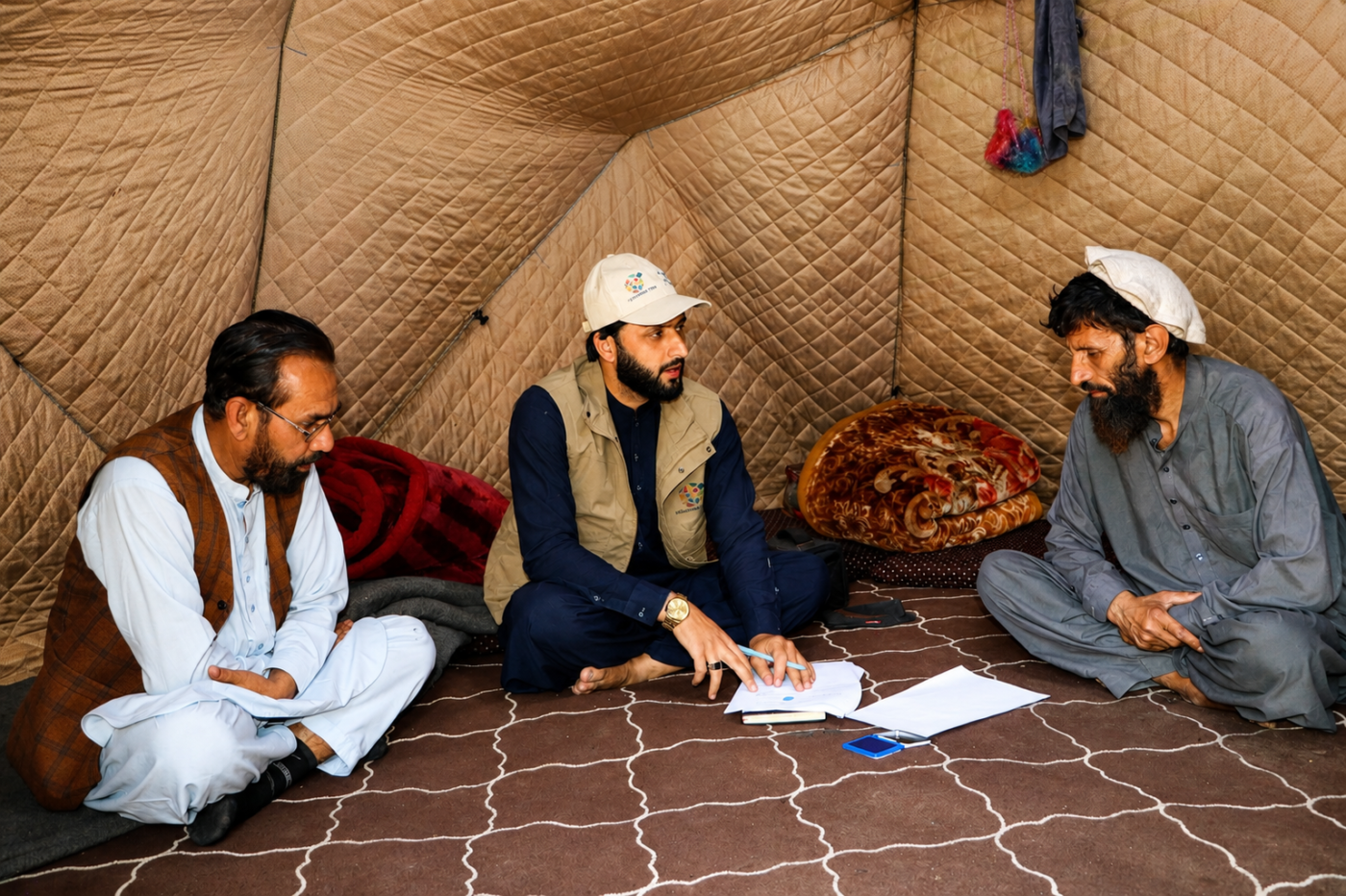
Three men sit together inside a tent in Arrit Valley, Kunar, Afghanistan.
The long road to recovery

As the emergency response evolved into longer-term recovery, Abdul Samad and his family received different forms of support that helped them meet their immediate needs, including temporary shelter, food and financial assistance.

But rebuilding a life after such profound loss required much more than replacing what had been destroyed.

HealthNet TPO continued supporting Abdul Samad, his wife, and son, through the Arrit Primary Health Centre, which has remained a vital source of healthcare for the community throughout the recovery. As of June 2026, a total of 11,899 people (5,127 women and 6,772 men) affected by the earthquake have received essential health services there, including emergency medical treatment, primary healthcare, and mental health and psychosocial support.

Healing beyond physical injuries

Although Abdul Samad and his wife gradually recovered from their physical injuries, the emotional impact of losing six children remained overwhelming.

The trauma affected their daily lives, making it difficult to sleep, interact with others and return to their normal routines.

Through the Arrit Primary Health Centre, both continue to receive mental health and psychosocial support, including individual counselling, group sessions, medical follow-up, and treatment for depression. Over time, these services have helped them regain emotional strength and begin rebuilding their daily lives.

For Abdul Samad, recovery has meant more than healing physical injuries. It has also meant learning to live with profound loss while finding the strength to move forward.

Their recovery is still ongoing, but they no longer face it alone.

Looking ahead

Today, Abdul Samad is still living in a tent while a new three-room house is being built. The road to recovery has been long, and the loss of his children will remain with him forever. Yet, despite everything, he continues to look towards the future with hope.

One year after the earthquake, recovery in Arrit Valley is far from over. Many families are still rebuilding their homes while continuing to cope with the lasting physical and emotional consequences of the disaster.

HealthNet TPO remains alongside these communities, ensuring that people continue to have access to essential healthcare and mental health support long after the emergency has passed. Because recovery is not measured only by the homes that are rebuilt, but also by the lives that are gradually restored.

The impact of a disaster can last for years. Support communities on their journey from emergency to long-term recovery.

Subscribe to our newsletter

Get our latest stories and updates delivered to your inbox.